

FREE UK and US shipping | Get the ebook free with your print copy when you select the "bundle" option | T&Cs apply
Beyond Visitor Numbers: Measuring Tourism's Real Impact
Tourism Is Stuck and We’re Measuring the Wrong Things
For as long as I’ve been in this industry, first as a travel advisor and later as a journalist, success has been defined by “more”. More visitors. More spending. More growth. If those numbers are up, we call it a win. Those are the numbers that get reported, funded, and celebrated because they’re easy to measure and easy to show.
And if I’m being honest, I’ve been an unwitting participant in this same system, a system that presumably works, until it doesn’t.
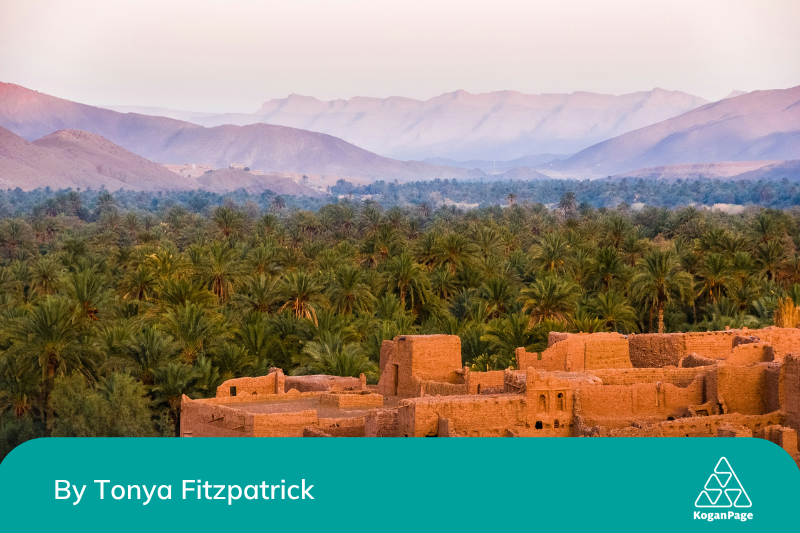
The moment of realization came shortly after I found myself knee-deep in mud as I walked through a river in the High Atlas Mountains in Morocco.
What should have been a flat and easy trek to the next village turned into a wet and muddy mess as our mountain guide decided to take a more challenging and adventurous route. This route involved a muddy river crossing, something I had avoided doing all week, and I got stuck. To say that I was irritated is an understatement, especially when I kept sinking deeper with each new step. The issue worsened when my “waterproof” hiking boots started filling with water.
At one point I couldn’t move so I was forced to stop and think about what I was actually doing wrong. I quickly realized that I had to move slower and with intention instead of rushing through the river.
The correlation between my situation and tourism didn’t hit me right away, but after I reached dry ground, everything started to make more sense. Things are shifting in tourism, but many destinations continue to create marketing plans around success metrics that don’t work anymore and they get stuck.
As a travel journalist, the expectation isn’t just to tell a story. It’s to get people interested enough to go. To highlight what makes a place appealing in a way that drives movement. Whether we say it directly or not, there’s always that underlying push that more people should go somewhere.
But that doesn’t tell the full story.
Overtourism is the problem
If you spend enough time in destinations, not just visiting, but paying attention to your surroundings, you start to notice where that model doesn’t always hold up. In some places, it shows up as tension between residents and visitors. In others, it’s in the stories coming out of places like Spain, where locals are pushing back as tourism reshapes their communities in ways that don’t feel sustainable.
You see it in the quieter things too. Places that start to feel a little less distinct. Culture that shifts in ways that are hard to explain but easy to feel.
As quoted by Elizabeth Becker, journalist and author of Overbooked, she noticed, “Tourism was growing quickly, but there wasn’t enough attention on what growth was actually doing to destinations over time. That’s not theoretical anymore. We’re watching it happen.”
And still, we’re measuring success the same way.
I’ve seen this play out more times than I can count. When something feels off, the instinct isn’t to stop and reassess. It’s to push harder. To market harder. To message differently.
But at some point, the question has to be asked whether the issue is really the message, or whether it’s the model underneath it.
Because what we measure drives what we do.
Which model should tourism follow?
We track arrivals, occupancy, and revenue because they’re easy to quantify. They give us something concrete. But they don’t tell us whether residents feel supported or pushed out. They don’t tell us whether culture is being protected or reshaped. They don’t tell us whether a destination is actually better off because of tourism.
Since we’re not measuring those things in a consistent way, they don’t carry the same weight when decisions get made.
That’s not accidental.
That’s a choice.
That choice shows up in governance, whether we call it that or not. It shows up in what gets funded, what gets prioritized, and who really benefits from tourism. If the system is built around volume and short-term returns, that’s what it’s going to keep producing, even when the long-term costs are obvious.
Dr. Kelly Bricker, Vice Chair of the Global Sustainable Tourism Council, has been saying this for years in different ways. “Biodiversity, resident sentiment, cultural integrity—those things have been treated as secondary, not because they don’t matter, but because they weren’t built into how success is defined.”
So, they’ve been easier to ignore.
The Asset in Tourism
Jonathan Tourtellot, founder of the Destination Stewardship Center and former director of National Geographic’s Center for Sustainable Destinations, said something which felt profound and that has stayed with me ever since. ‘The asset in tourism isn’t the visitor. It’s the place—its culture, its environment, and its people.’
And if that’s true, then the condition of that place should be central to how we measure success.
But that’s not what we’ve been tracking.
We’ve been tracking movement, not condition.
And you can feel what that leads to.
You see it when a place starts to lose something that makes it feel like itself. Local businesses disappear. Traditions start to feel like performances. Communities begin to feel like they’re on the outside of something that used to belong to them.
That kind of loss doesn’t show up neatly in a report.
And once it happens, it’s hard to undo.
No spreadsheet is going to restore what’s been lost through mismanagement.
As mentioned by Megan Epler Wood, leader of Sustainable Tourism Asset Management Program (STAMP) at Cornell University, in her book Sustainable Tourism on a Finite Planet, she talks about this from an economic perspective. ‘How unnatural and cultural assets have been undervalued for a long time. And if something is undervalued, it’s usually underprotected. That’s not complicated, but it has real consequences.’
This isn’t about stopping tourism. It’s too important: economically, culturally and in how it connects people.
It’s about being more honest about what success should look like.
Because success can’t only be about how many people show up. It must be about what remains after they leave. Whether communities are stronger. Whether culture is intact. Whether the environment is still holding.
Some destinations are starting to move in that direction. Bhutan is one of the clearest examples. Their approach isn’t about chasing volume. It’s about making sure tourism serves the country, not the other way around.
“Tourism should benefit Bhutan economically, but leave a minimal footprint on its culture and environment.” As stated by Dorji Dhradhul, former Director General of the Bhutan Tourism Council.
That’s a different way of thinking about success.
Why do we need destination stewardship?
This is where destination stewardship starts to become real. At its core, it’s about taking responsibility for a place, actively managing tourism so it benefits the community, protects culture and natural resources and creates a positive impact over time. Not simply attracting visitors, but also making sure tourism works for the people and places that make it possible.
It’s not about adding more metrics. It’s about choosing better ones, and that’s where the shift gets uncomfortable, because for a long time this industry has been conditioned to believe that more is always better. Tourism isn’t broken, but the way we’ve been measuring success is.
Back in Morocco, once I stopped trying to force my way through the mud, something changed. I slowed down, paid closer attention to where I was stepping, and adjusted. Eventually, I found my way through.
That’s where we are right now in tourism. We can keep pushing the same way, keep using the wrong metrics to assess success and remain stuck, or we can adjust. If we don’t change what we measure, we won’t change what we protect and that’s a risk destinations can’t afford to ignore.
Save 30% on Destination Stewardship with code ATH30.